By December 2024 Inclined was processing about 3,600 policy documents a month, on an operations product built for a much smaller company.
That product had been built around one agent walking one loan from invitation to funding, with everything about it in that person's head.
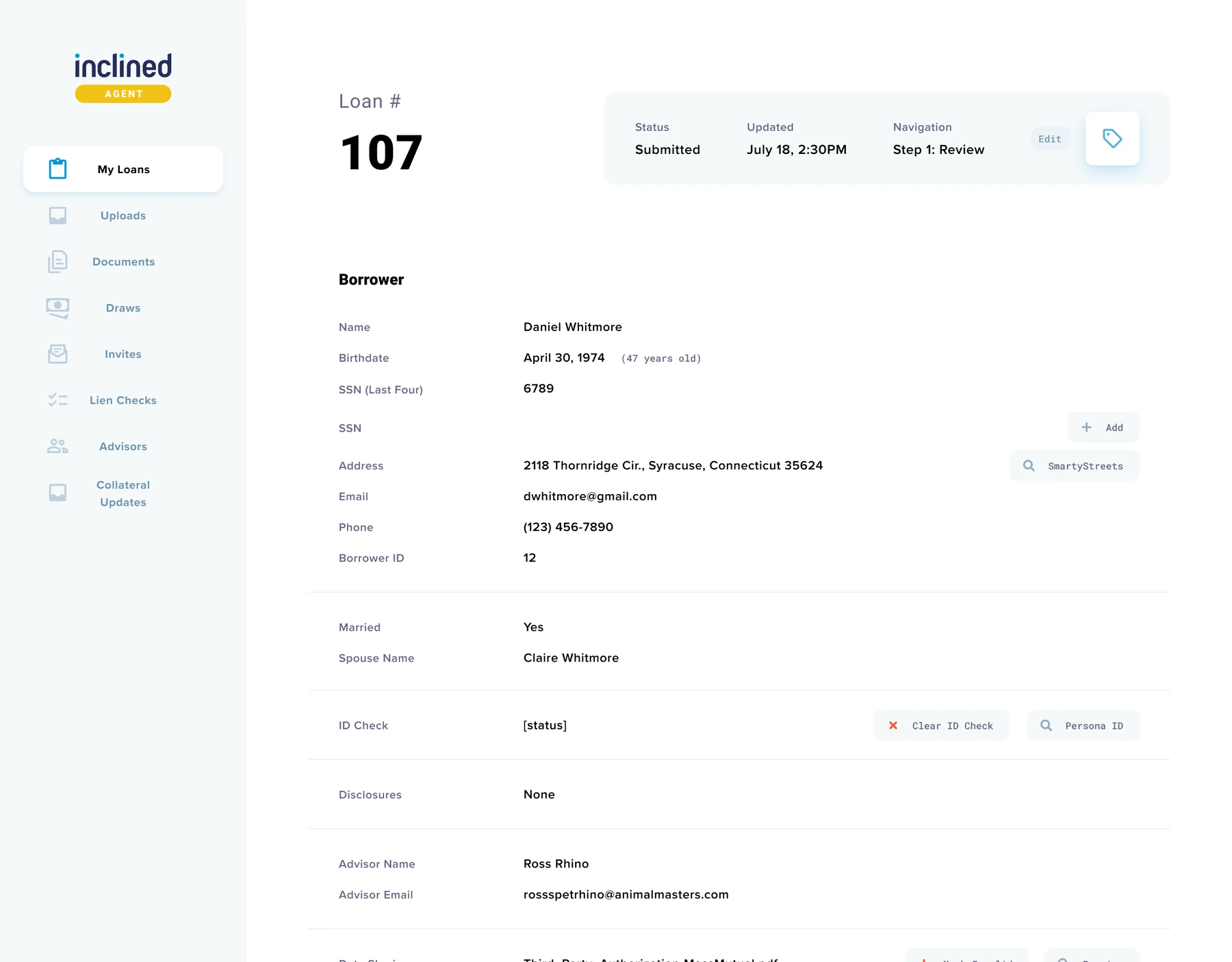
That was the right model at launch, when we were small and every agent was senior. It was the wrong model for the company we were planning to be, because the only way to grow was to hire more senior agents, one for one with volume.
The PM and our Head of Ops at the time brought a proposal: rebuild the operations product around queues. Leadership was behind it, and the business case was outsourcing the low-skill work. I agreed with the direction. Before any design started, I argued with two things underneath it.
The first was the diagnosis.
Pitched as: our system is built for a linear process, so it can't scale. Reframed as: the process is linear and always will be. What has to change is how the work is split.
Every line of credit goes through the same steps in the same order. That's what a loan is. The distinction matters because of what you build next. Build a queue for each stage and every new workflow needs its own queues, forever. Build queues around the kind of work and you need a handful. Confirming a document is the same job whether it arrives during origination, a collateral update or an overdue premium. One document queue, and every workflow feeds it.
The second was the size of the bet.
Pitched as: a dedicated rebuild, paid for by outsourcing. Sized as: one end state, reached through normal product work.
At 3,600 documents a month I didn't think outsourcing penciled. So instead of a dedicated rebuild, I proposed picking the end state, holding it steady, and getting there through the projects ops was already asking for. Each one would solve their problem and move the platform a step closer.
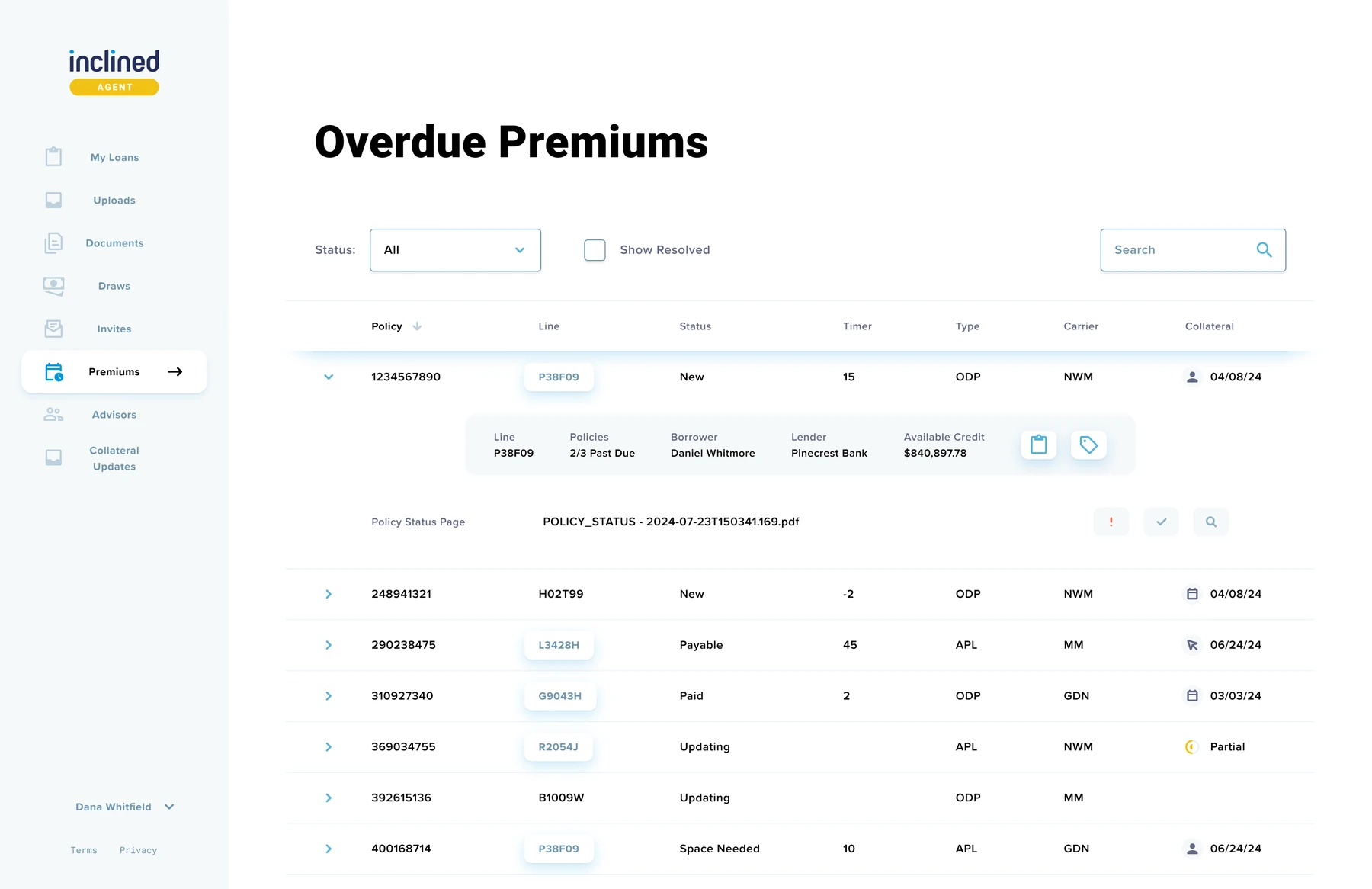
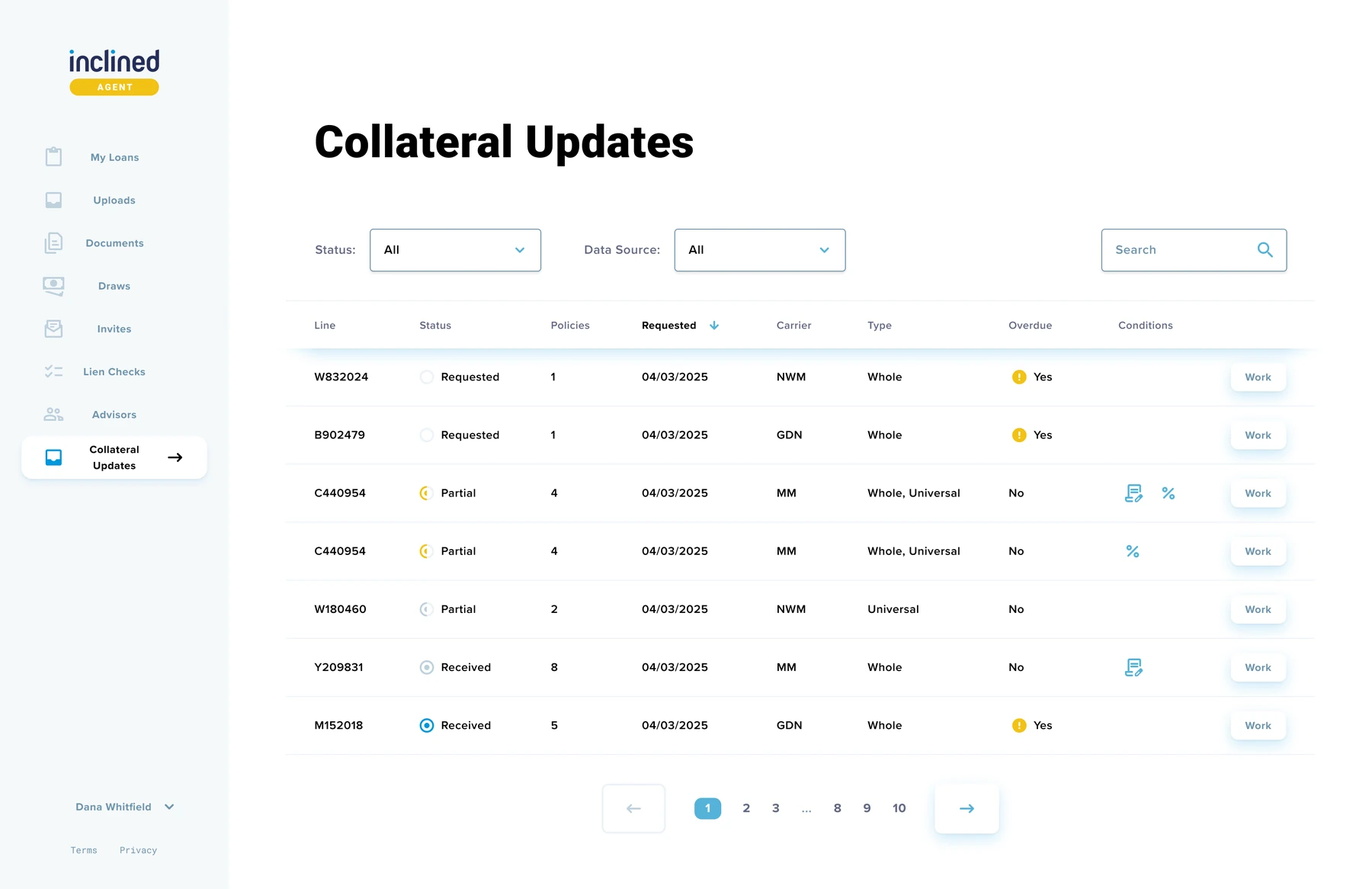
That is how the first two queues shipped. Neither was scoped as a queue project. Ops needed better tooling for overdue premiums and for collateral updates, and both arrived as queues: a list of work, enough context in each row to act without leaving the page, and the same kind of work batched so one agent can clear a stack in a sitting.
The next one is the document queue, and its centerpiece is already designed, so that what engineering builds today fits what comes later. It is one component that handles every state a document can be in.

The largest step so far was the loan page itself. The ask was a feature, letting a customer add policies to a line that was already open, and I used it to rebuild the page. The rebuilt loan page shipped in September 2026 with four changes that amount to one: it now works the same way the queues do.
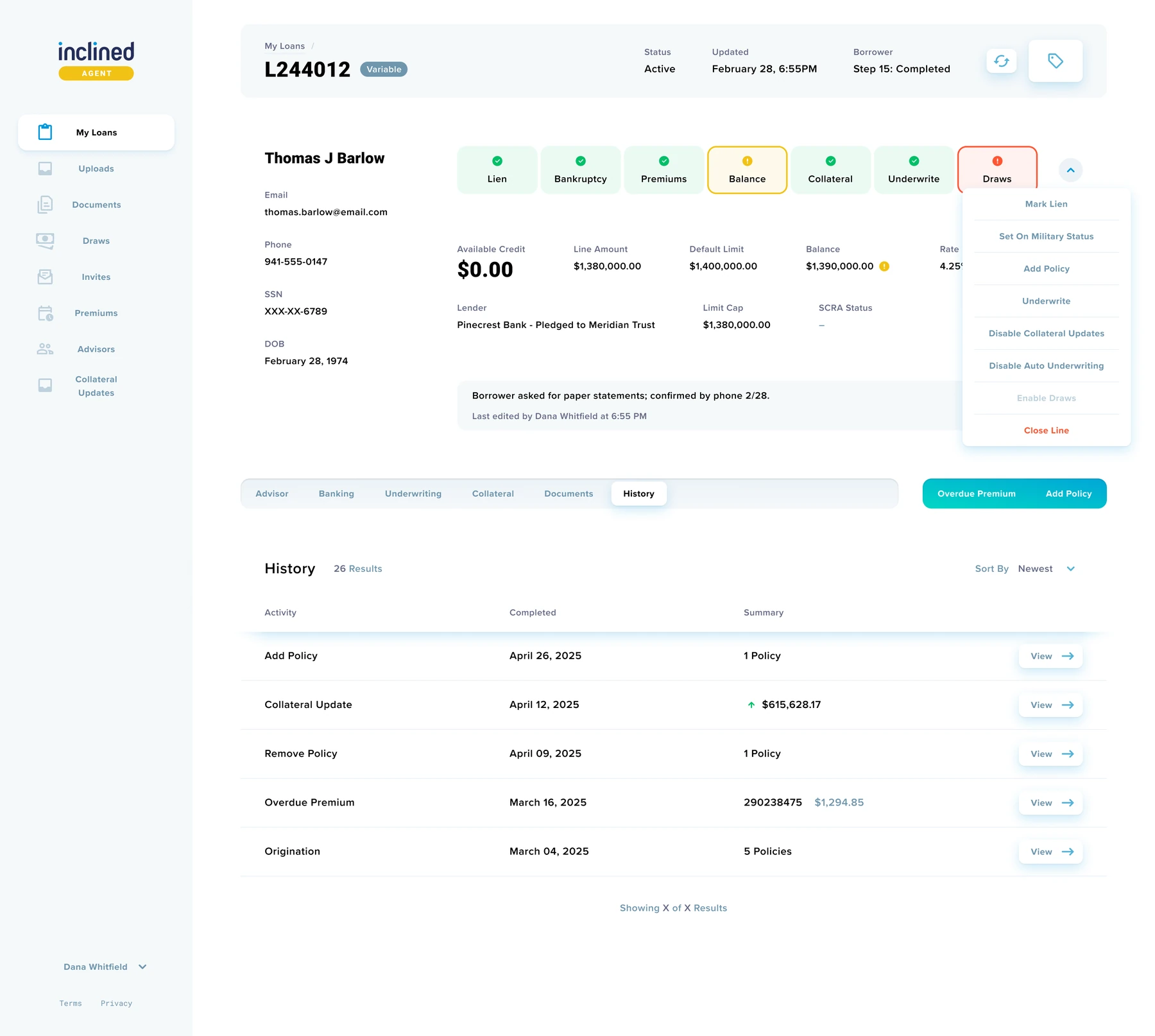
- Line health: every status, one row.
- Actions: only what you can do right now.
- Active tabs: work in progress, opened in place.
- History: every event, in order.
The work moves, not the agent. The system tells you it's there, and you can reach it from the loan or from the queue. For carriers that send daily data feeds, collateral updates now clear on their own, and only the exceptions land in the queue.
Along the way, the reason for the project went away. When the Head of Ops left, leadership pulled back on outsourcing. A dedicated rebuild would have ended there. This kept shipping, because it was never a bet on outsourcing.
In December 2024 the whole team worked about 3,600 documents a month. A year later one agent worked 3,900 alone. Over that year the team's volume about tripled while the team grew by half, from six people to nine. Overdue premium completions went from about 100 a month to about 330.
Every piece that has shipped is still in use, every new workflow has fit inside the structure, and nothing has had to be torn out to make room. The document queue and the agent home screen are next, and neither needs a rebuild.
I was asked for better ops tooling. The company needed the architecture it added up to. It shipped inside product work already on the roadmap.